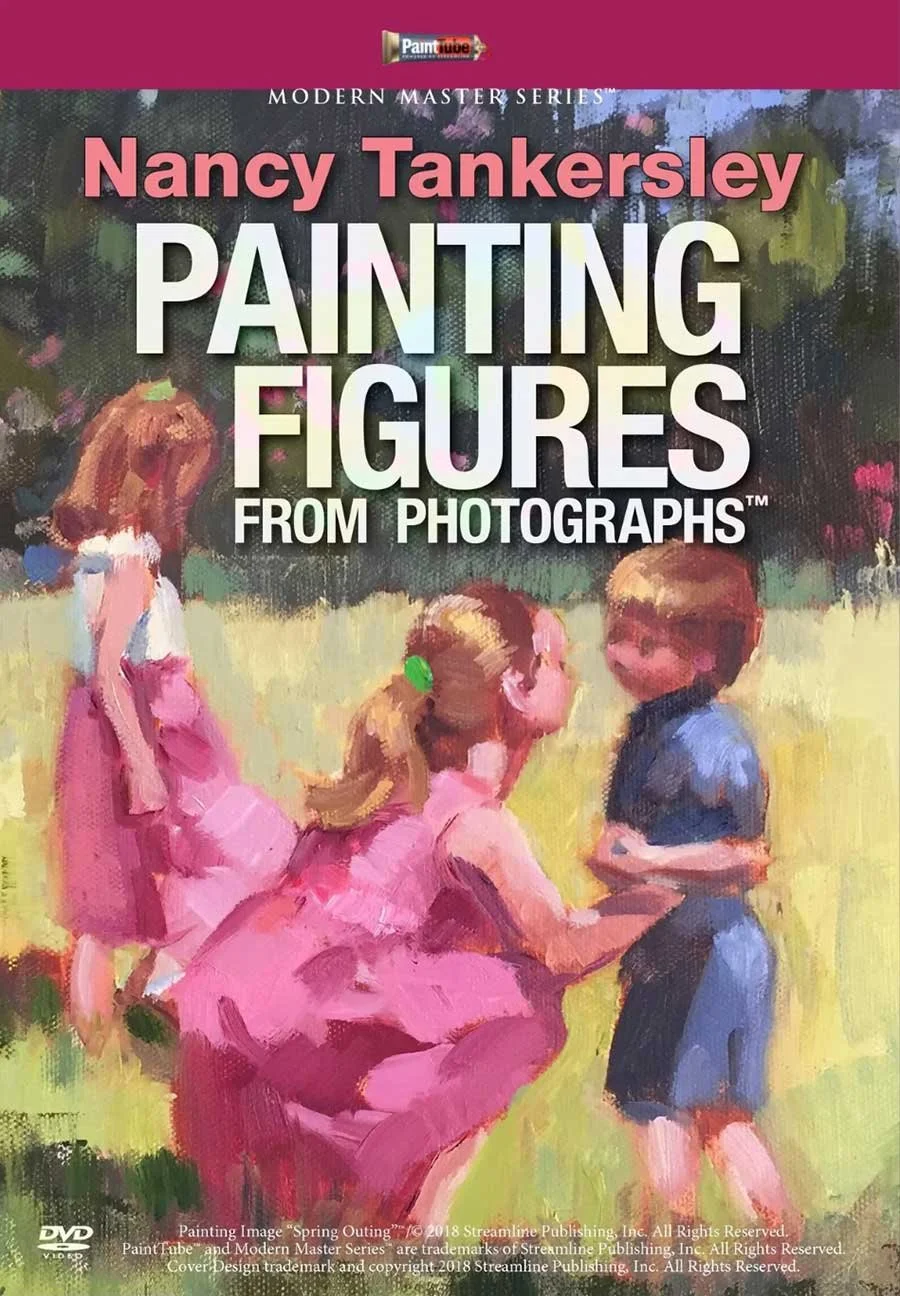
Keeping It Fresh; Painting Figures From Photos with
Nancy Tankersley
4 Day Studio Workshop
Icebreaker: 5 p.m. May 12, 2026
Workshop: May 13 - 16, 2026
9 am - 4 pm
$840 + 6.88% NM Sales Tax
About the Workshop
Skill level: Open to all levels, although artists with at least some basic landscape painting experience will benefit most.
Materials used: Oil (Acrylic and water-soluble oils are fine too)
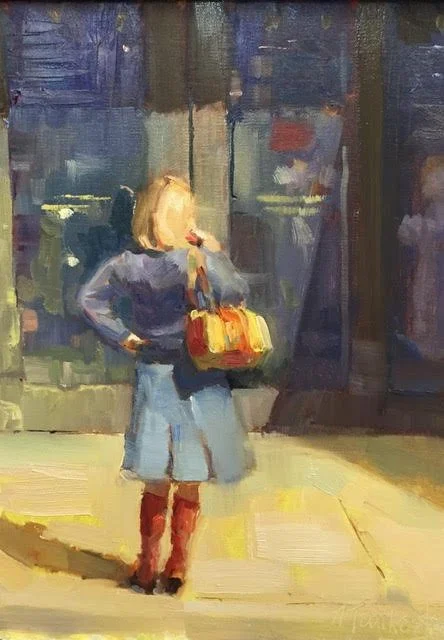
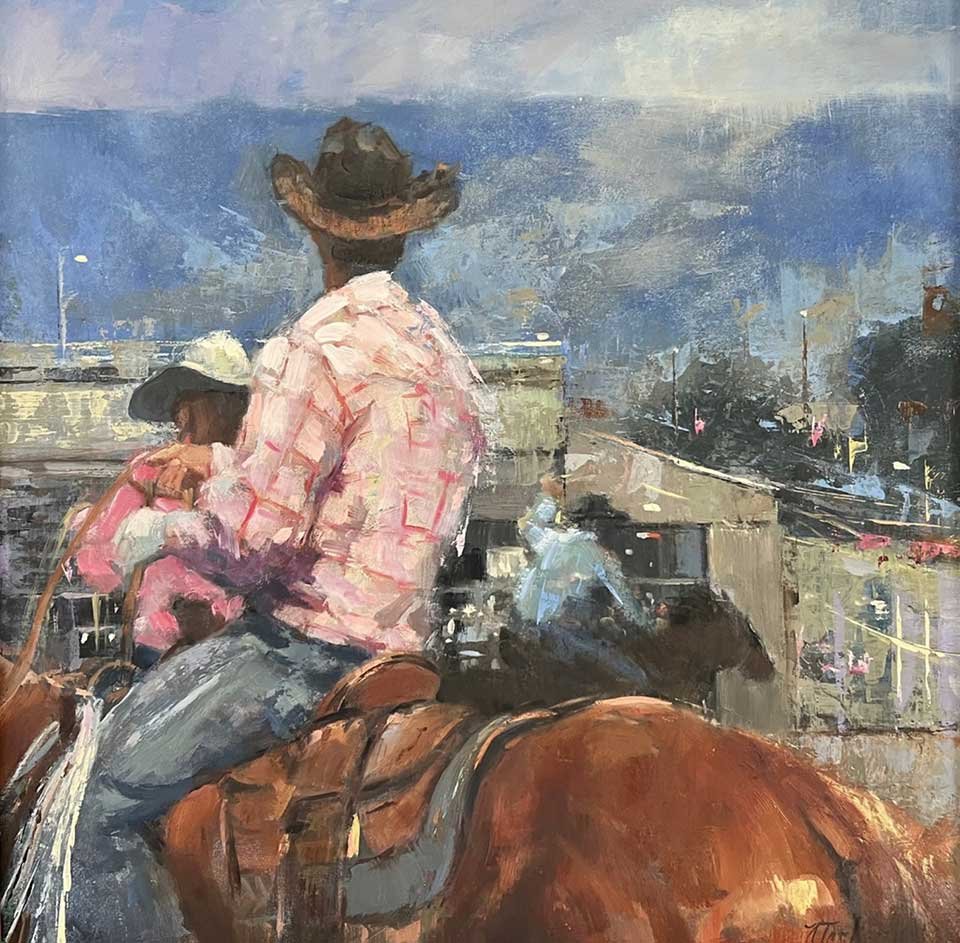
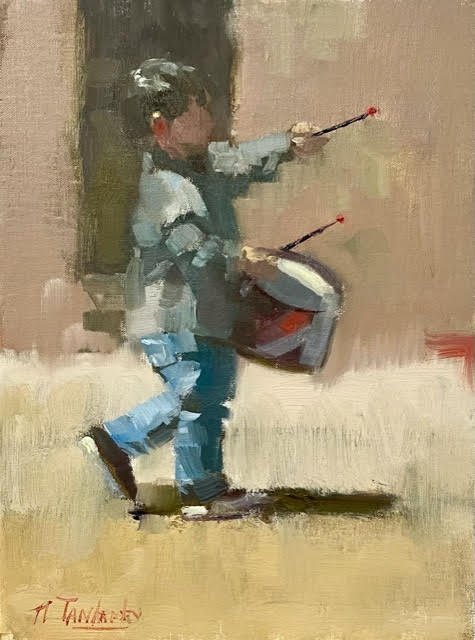
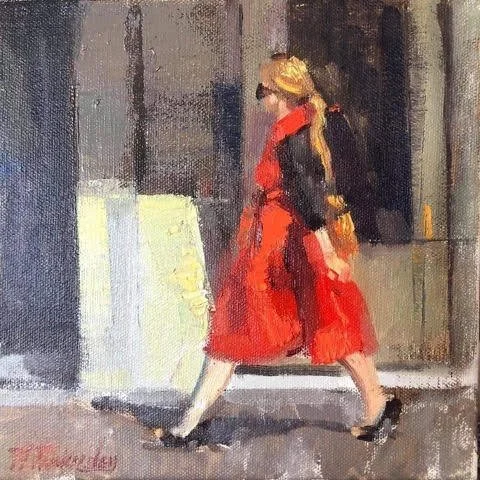
In this workshop, you’ll learn how to break the figure down into simple shapes and to ensure accurate drawing from the start, even if you have never painted a figure! Through lecture and painting exercises, Nancy will help you select photographs that will make great paintings. She’ll demonstrate her methods of working with photos in order to produce a painting that looks as though it were painted from life and is full of life! You’ll learn to create atmosphere, merge the figure with the background, and avoid copying and make intelligent decisions about the information that a photo gives you. Description to come.

About Nancy
NANCY TANKERSLEY
Contemporary Impressionist
Nancy Tankersley began her career as a portraitist but entered the gallery scene with figurative paintings of people at work and at leisure. Currently as she searches for the unpredictable, Tankersley moves between landscape, figures and still life. Incorporating non- traditional tools , supports and technologies for her paintings she remains faithful to her impressionistic style.
Active in the current plein air movement, and a founder of Plein Air Easton, she travels worldwide participating in competitions, judging and teaching. In 2018,2019 and 2020 she was invited to be an instructor and demonstrator at the Plein Air Convention in Santa Fe and released two instructional videos with Lilliedahl Videos. In 2016 and 2017 she was invited to exhibit at the prestigious Masters Exhibition at the Salmagundi Club in NYC. Recent honors include Best of Show at Parrsboro, Nova Scotia International Plein Air 2018, Best of Show at the Lighthouse Plein Air Festival 2017 and the Dickinson Award for Best Painting by a Signature Member of the American Impressionist Society 2016 Annual Juried Exhibit. In 2019 she was selected to be the Featured Artist at the 49th Waterfowl Festival in Easton, Maryland. In 2024 she was honored to be the judge at the 20th Anniversary of Plein Air Easton. In 2025, at Plein Air Easton, she received the Alumni Award for her painting of conserved property at the Chesapeake Bay Environmental Center. She is a Signature Member of the American Impressionist Society, the American Society for Marine Art, and the Mid-Atlantic Plein Air Painters and is a juried member of the Washington Society for Landscape Painters. The artist mentors and teaches workshops nationally and internationally.
What’s Included
This workshop includes a mix of complimentary food and beverages. Included are the following:
Complimentary continental breakfast: yogurt, granola, hard boiled eggs, pastries and fruit. Along with unlimited coffee and teas. GF is available.
Coffee, hot and/or iced tea, lemonade, soft drinks, sparkling waters, and fruit-infused still water are available all day
Catered lunch brought into the studio or painting location for $20 (optional)
Supplies
Paints - For oils and acrylics, I encourage the use of a limited palette containing a warm and cool yellow, warm and cool red, and warm and cool blue plus a white and burnt sienna (for underpainting). You may use your own colors as long as there is a distinct difference in the warm and cool version of each primary color.
Here are my typical choices:
Hansa yellow light
Indian Yellow or Cadmium yellow ( or any warm yellow) (Make sure the two yellows are very different)
Cadmium red light (warm red), Fanchon Red (Williamsburg), Naphthol Red
Alizarin crimson permanent or Quinacridone Red
Ultramarine blue
Cerulean blue, manganese blue or pthalo blue
Titanium white (large tube), Flake White Replacement (Gamblin)
Burnt sienna
For gardens with blossoms, it is sometimes hard to get the right pink or purple with a limited palette. If you plan to have a garden in your painting, it will be helpful to have tubes of quinacridone red and dioxide purple.
Any professional quality brand may be used, avoid the student grade. They don’t have enough pigment, make it harder to mix color and may end up being more expensive in the long run. The cadmium paints are the most expensive and also more toxic, so I am using replacements for the cads. I discovered a mixture of Quinacridone red and Indian Yellow with a tiny bit of white makes a good substitute for cad red light! The most important thing is to have both a warm (moving toward orange on the color wheel) or cool (moving towards blue) version of each of the primary colors red, blue and yellow.
Pastelists, use your usual set-up.
Panels or Canvas
Have a variety of sizes from 8 x 10 up to 12 x 16, depending on how large you like to work and how fast you paint. Have two canvases for each day. You may use canvas paper as well. https://drive.google.com/file/d/1nv33z_OXBT3J9LeqOM0_EUbldMkQslOe/view?usp=share_link
Brushes
Most people work with brushes that are too small. For this workshop, push yourself to use larger brushes than usual. At minimum have:
#12 white hog bristle filbert
#8 white hog bristle filbert
#6 hog bristle flat
#2 red sable ( can be synthetic) round
One medium flexible palette knife for both painting and scraping the palette. Or you may buy one for each purpose. I like the long diamond shaped best.
Mineral spirits. In my own studio I use non-toxic Citrus Essence Cleaner from Chelsea Classical Studio or Sennelier #Green are both good non-toxic solvents, but you may use any odorless solvent as long as it is in a container that can be capped when not in use.
Medium : anything you have available. A quick drying medium would be good for this workshop, such as: Liquin Light or Gamblin Solvent Free Gel. I like The Sennelier #3 gel.
5-10 reference photos of landscapes with figures (or animals) in them. Ideally you will have several shots of the same scene, from which you can pick and choose the elements you want in your painting. Also bring a camera (smart phone ok) to take reference photos around the ranch.
Working from your reference materials: You can either work from a paper photograph or you may work entirely from an iPad or computer screen. If you want to work from paper ( I print out my reference photos full page size in black and white on regular cheap computer paper) please have several clear plastic sleeves, a dry erase black marker, and a ruler. If you want to work from a screen, you’ll need an app to help with measuring such as #Grid and a program for values such as See Value. I’ll demonstrate both methods in my demos.